Artificial intelligence is no longer reserved for large developers and Tier 1 contractors. In Singapore's construction industry, SMEs — subcontractors, specialist trades, small builders — are increasingly recognising that AI can solve the operational problems they face every day on site. But adopting AI without a clear plan leads to wasted budgets and frustrated teams.
The good news? Construction SMEs don't need massive IT departments or custom software builds. The most successful AI adoptions we've seen follow three straightforward best practices — and they start with problems you already have.
1. Identify the Right Construction Problem
Not every problem on a construction site needs AI. The temptation is to apply new technology to everything, but the highest-value opportunities share a common trait: they involve high volumes of unstructured data that humans are already processing manually.
Here are the problems where AI delivers immediate, measurable returns for construction SMEs:
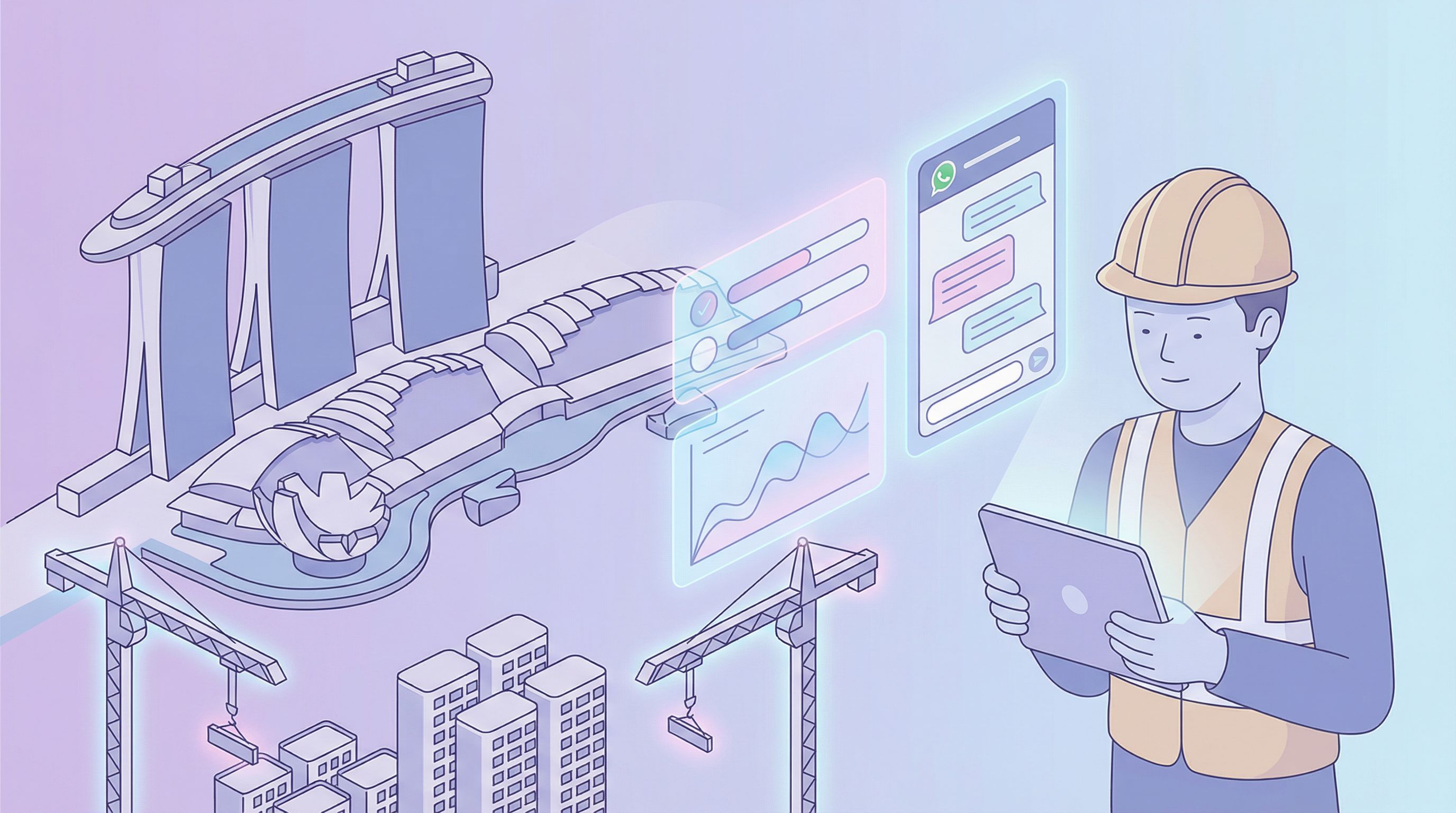
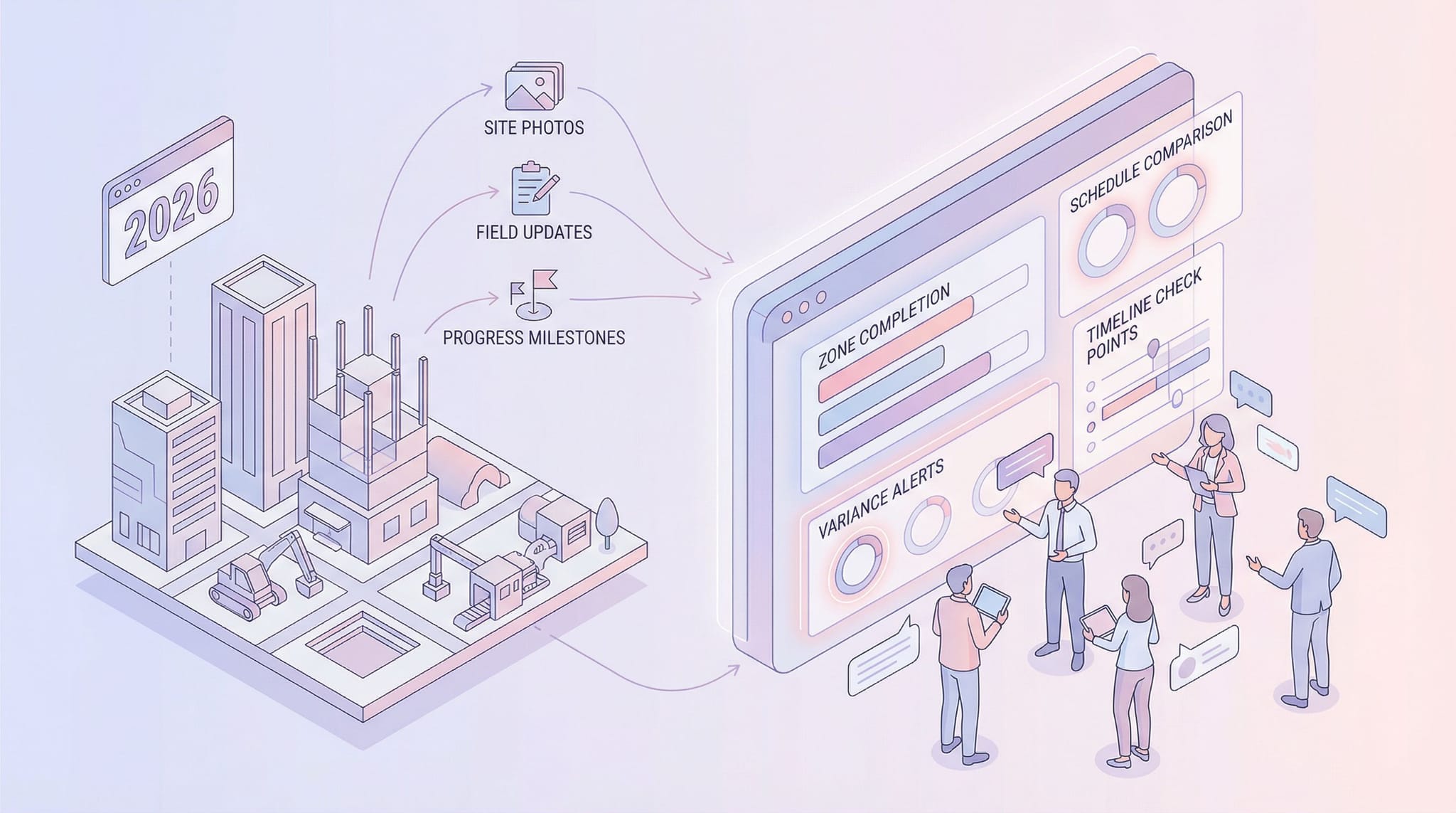
- Progress tracking: Site managers spend hours each day compiling daily reports from 300+ WhatsApp messages across multiple groups. They're mentally filtering status updates from noise, matching messages to zones and activities, and summarising everything into a format the client or main contractor accepts. This is exactly what AI agents excel at — processing high-volume text and photo data into structured reports.
- Safety documentation: Many SMEs compile safety records retrospectively, reconstructing what happened from memory and photos after the fact. AI can monitor site photo feeds and messages in real time, flagging safety observations as they occur and building compliance records automatically.
- Quality management: Defects caught during inspections are often documented inconsistently — a photo here, a WhatsApp message there, a handwritten note somewhere else. By the time rework is needed, the original context is lost. AI can consolidate defect data from multiple sources and link it to specific locations and activities.
The cost of getting this wrong is significant. Industry data consistently shows that rework costs 5–20% of total contract value. For an SME working on thin margins, even a small reduction in rework through better defect tracking can mean the difference between profit and loss on a project.
The problems you shouldn't start with are those that require complex judgment calls, involve very little data, or where the current process already works well. Start where the pain is sharpest and the data is most abundant.
For a deeper look at how AI agents handle these construction-specific workflows, see our guide on what agentic AI means in construction.
2. Assign an AI Champion
Every successful AI adoption we've seen in construction SMEs has one thing in common: a single person who owns the rollout. This isn't a technology role — it's a coordination role.
The AI champion doesn't need to understand machine learning or write code. They need to understand two things:
- How the site actually works — the real workflows, not the ones in the project management manual. Who sends updates to which WhatsApp group? What naming conventions do teams use for zones? When do photos get taken and by whom?
- What "good output" looks like — they can look at an AI-generated daily report and tell you whether it captured the right information, missed something important, or misinterpreted a message.
In construction SMEs, the best AI champions are typically project coordinators or senior site supervisors. They sit at the intersection of field operations and project management. They already process the data that AI will be working with — they're just doing it manually today.
The champion's responsibilities are straightforward:
- Brief field teams on what the AI does and what it doesn't do (usually a 10-minute conversation)
- Review AI outputs during the first two weeks and flag errors
- Communicate feedback so the AI system can be tuned to the project's specific terminology and structure
- Report results to management — time saved, errors caught, reports generated
Without a champion, AI tools get connected and then ignored. With one, adoption typically reaches steady state within two to three weeks.
3. Prepare Your Site Data
This is where construction SMEs have a significant advantage they don't realise: you already have the data.
Unlike industries where AI adoption requires installing sensors, building data pipelines, or migrating to new platforms, construction sites already generate enormous amounts of usable data every single day:
- WhatsApp messages — status updates, issue reports, coordination between trades, photo shares
- Site photos — progress photos, inspection images, safety observations, delivery records
- Daily reports — even if they're inconsistent, they contain valuable structured information
- Inspection checklists — quality checks, safety audits, handover records
No special infrastructure is needed. No new hardware. No app downloads. The data is already flowing through channels your teams use every day.
The one thing that does matter is consistent naming conventions. When your site team sends a message saying "L5 zone B rebar 70%" the AI needs to know what L5, zone B, and rebar map to in your project schedule. This means establishing simple, consistent conventions for:
- Zone or location codes — how you refer to areas of the project (levels, blocks, grids)
- Activity descriptions — the shorthand your teams use for different work items
- Status indicators — how progress is communicated (percentages, "done", "in progress")
Most teams already have informal conventions — the AI champion's job is to document them and ensure they're used consistently. This is a one-time setup that takes an hour at most.
To understand how WhatsApp data specifically feeds into AI-powered construction workflows, read our article on WhatsApp AI agents for construction.
Why Construction SMEs Are Uniquely Positioned for AI
There's a common misconception that AI adoption is easier for large companies with big IT budgets. In construction, the opposite is often true. Here's why SMEs have structural advantages:
- Less legacy software to replace: Large contractors are locked into enterprise platforms with complex integrations. SMEs often have fewer systems, which means fewer migration headaches and faster deployment. You're not replacing a $500K platform — you're augmenting processes that are currently manual.
- WhatsApp is already universal: Singapore's construction industry runs on WhatsApp. Every subcontractor, every site team, every project coordinator is already using it. AI that connects to WhatsApp requires zero behaviour change from field teams — they keep doing exactly what they're already doing.
- Visual data is already being captured: Site teams take hundreds of photos daily for progress records, safety compliance, and quality documentation. This visual data is exactly what AI computer vision models need to track progress and identify issues.
- Government support is available: Singapore's Productivity Solutions Grant (PSG) and Budget 2026 initiatives specifically support SME technology adoption. These grants can cover a significant portion of AI implementation costs, dramatically reducing the financial barrier to entry.
The reality is that construction SMEs who adopt AI now — while the technology is still new to the industry — gain a competitive advantage. They win more tenders by demonstrating data-driven project management. They reduce rework costs. They free up their best people from administrative tasks to focus on what they do best: building.
Common Concerns — And Why They Shouldn't Stop You
"Our workers aren't tech-savvy." They don't need to be. The best construction AI works in the background, processing data from tools teams already use. If your workers can send a WhatsApp message and take a photo, they can work with AI.
"We don't have enough data." A single active WhatsApp group generates hundreds of messages per week. A typical project produces thousands of site photos per month. You have more data than you think — it's just unstructured.
"AI will replace our workers." AI replaces administrative tasks, not people. The site supervisor who spends two hours writing daily reports can spend that time on the floor instead. The project coordinator who manually tracks progress across five WhatsApp groups can focus on problem-solving and coordination.
For a realistic look at what works and what doesn't in construction technology, see our analysis of why most construction tech fails.
Start Small, Prove Value, Then Scale
The best approach for construction SMEs is straightforward: pick one project, one problem, and one champion. Run it for four weeks. Measure the results — time saved on reporting, defects caught earlier, safety observations documented. Then decide whether to expand.
AI adoption in construction doesn't require a transformation programme or a six-month implementation. It requires identifying a real problem, assigning someone to own it, and connecting to the data you're already generating.
Ready to see how AI can work on your next project? Get started with Wenti Labs or explore how other Singapore construction firms are using AI in our case studies.