The Progress Tracking Problem No One Has Solved
Every construction project runs on one question: are we on track?
Yet on most sites, answering that question takes days. Site managers collect updates from foremen, cross-reference schedules, manually compile reports, and send them up the chain — by which time the data is already stale. According to KPMG's Global Construction Survey, only 31% of construction projects come within 10% of their original deadlines. The rest overrun — often because decision makers didn't see the warning signs in time.
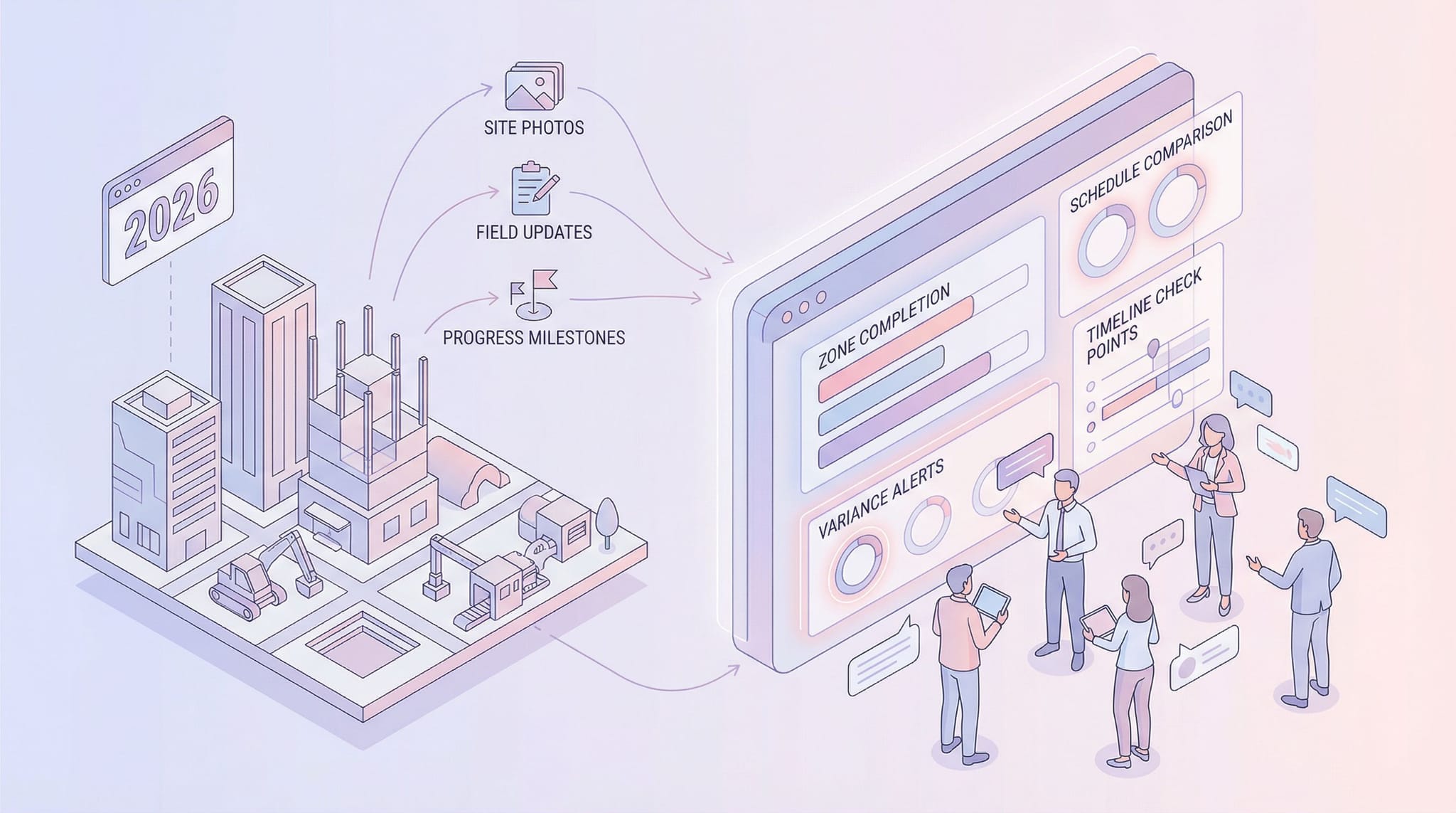
The problem isn't that progress data doesn't exist. Workers are capturing it every day — in site photos, WhatsApp updates, daily logs, and inspection reports. The problem is that this data stays unstructured and disconnected from the systems where decisions are made.
This is exactly where AI agents in construction are creating the most impact: turning the data that's already being captured into real-time, actionable progress intelligence.
 From Site Photos to Progress Dashboards — Automatically
How AI Agents Transform Progress Reporting
Traditional progress tracking follows a slow, manual chain:
Worker captures data → Manager consolidates → Admin formats report → Leadership reviews
Each handoff introduces delay, context loss, and human error. By the time a progress report reaches the people who need it, the information is 3–5 days old.
AI agents for construction compress this entire chain into a single automated flow:
Worker captures data → AI structures and analyses → Report is live
Here's what that looks like in practice:
Photo-Based Progress Recognition
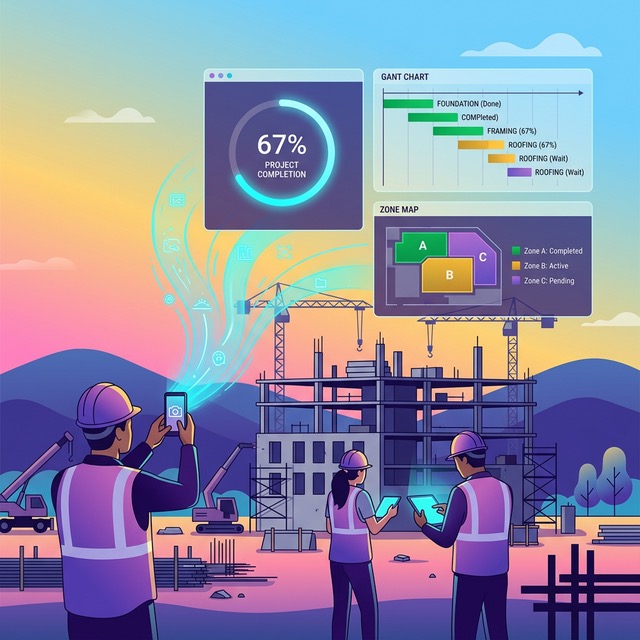
When workers photograph completed work — poured concrete, installed rebar, finished framing — AI agents analyse the images using computer vision. They identify what work has been completed, compare it against the project schedule, and update progress percentages automatically.
No manual entry. No form filling. The same photos workers are already taking for their own records become structured progress data.
Automated Daily Logs
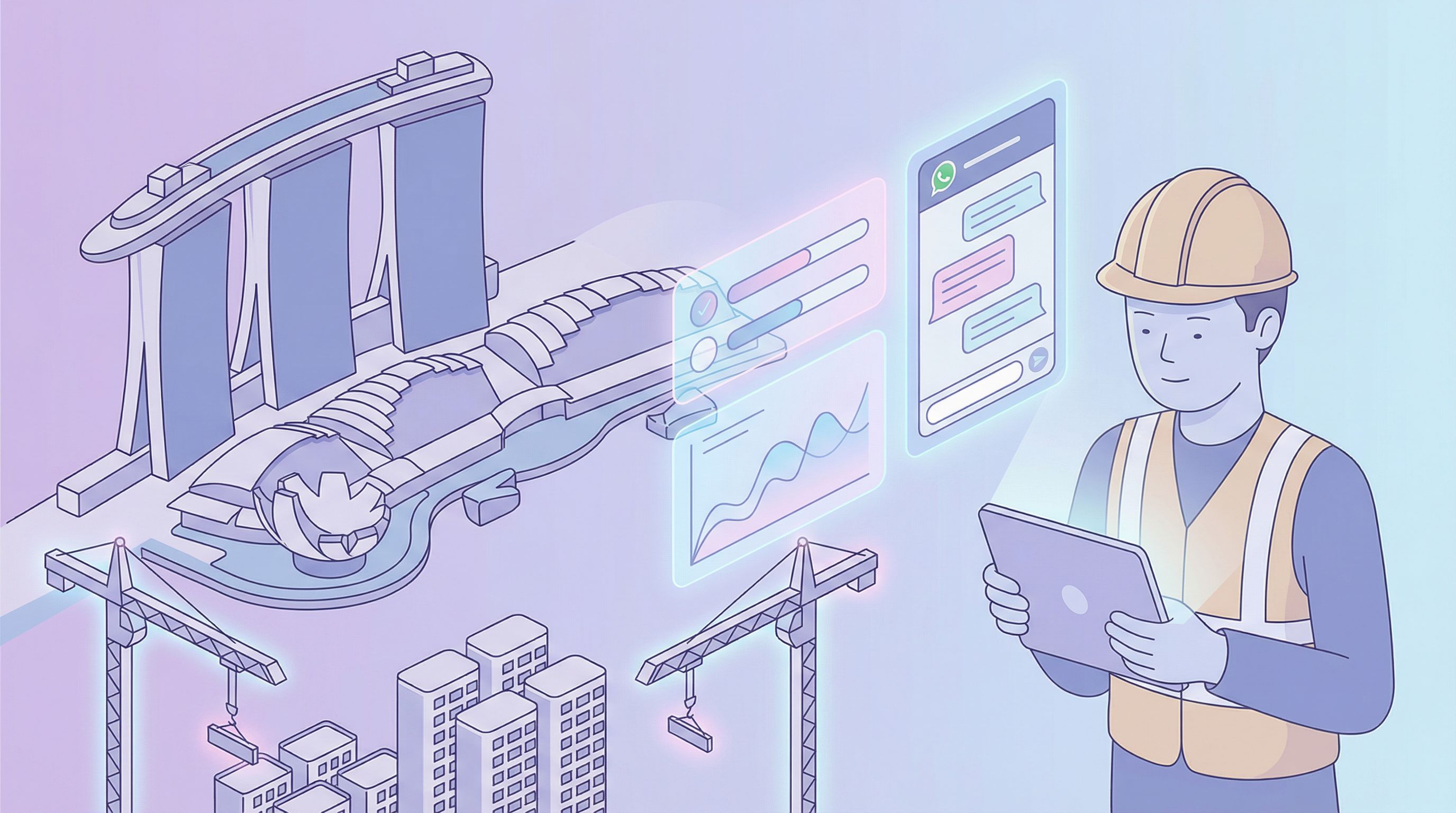
Messages sent in WhatsApp group chats — "Block A Level 3 slab poured today", "Rebar inspection passed for Zone C" — are automatically parsed by AI agents into structured daily logs. Each entry is timestamped, categorised, and linked to the relevant project zone.
This builds on the same WhatsApp AI agent workflows that Wenti Labs deploys for communication capture — but applied specifically to progress monitoring.
Schedule Variance Detection
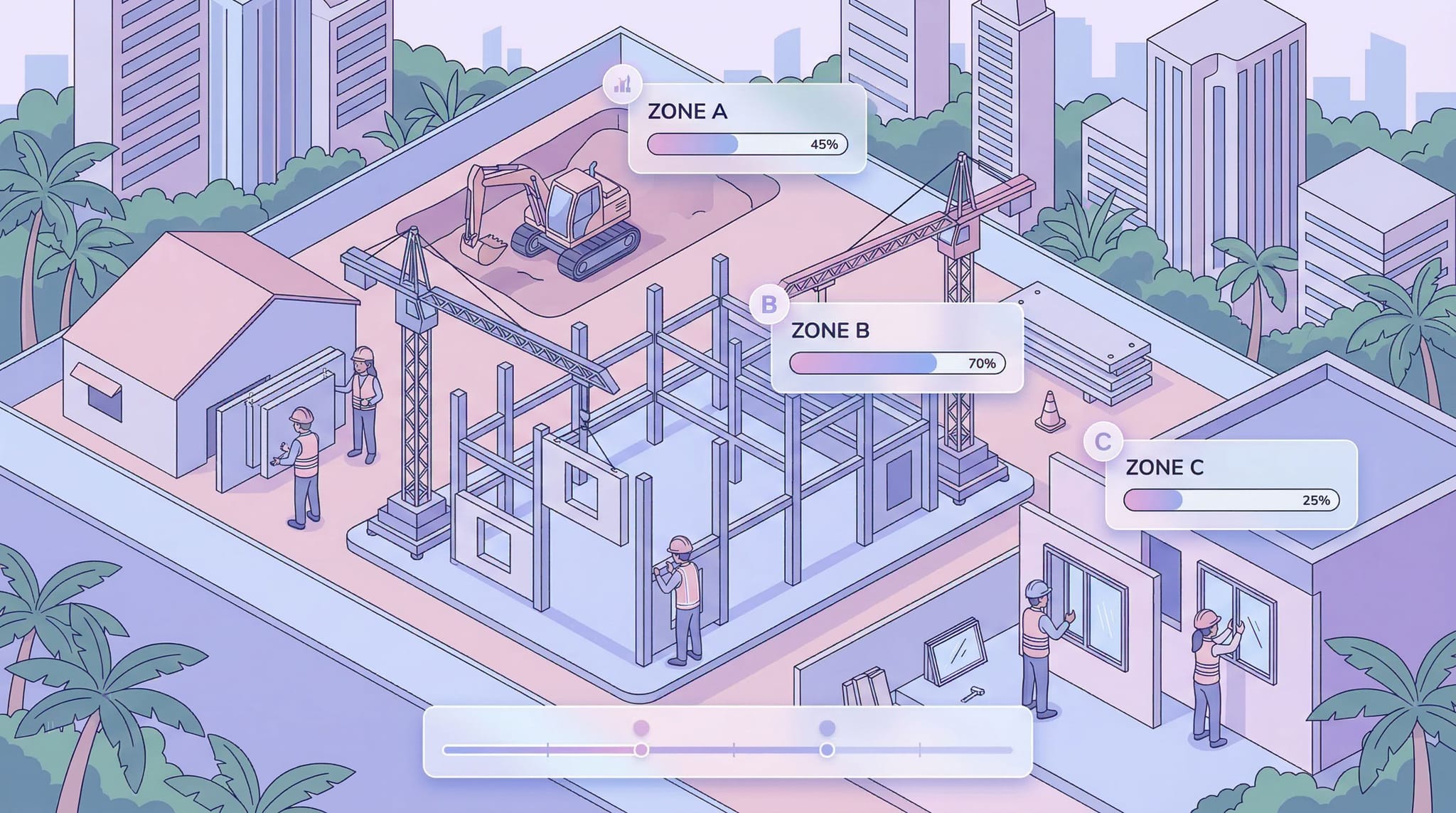
AI agents don't just record what's happened — they compare it against what should have happened. When actual progress falls behind the baseline schedule, the system flags it immediately. Site managers get early warnings like:
"Zone B structural work is 4 days behind schedule. Current completion: 62% vs planned 78%."
This kind of proactive alerting is only possible with agentic AI — systems that autonomously monitor, analyse, and escalate without being prompted.
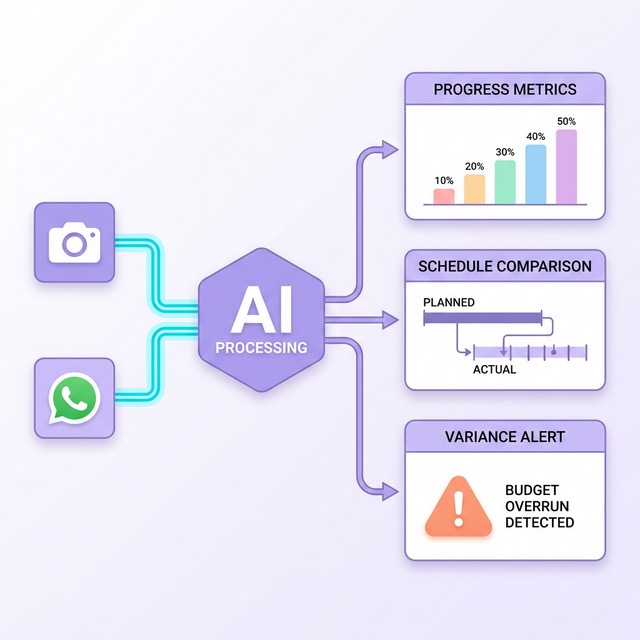 AI-Powered Progress Tracking Pipeline
The Cost of Delayed Progress Data
Late progress data doesn't just slow down reporting — it triggers a cascade of real project costs:
Material and Labour Waste
When progress is mistracked, materials arrive before the site is ready (wasted storage costs) or after they're needed (idle labour). The Construction Industry Institute estimates that poor planning driven by inaccurate progress data accounts for up to 10% of total project costs.
Client and Stakeholder Friction
Owners and consultants expect regular, accurate progress updates. When reports are delayed or inconsistent, trust erodes. Disputes over percentage completion — and the payment milestones tied to them — are among the most common sources of construction claims.
Missed Early Warnings
A delay caught at week 2 can be resolved with minor schedule adjustments. The same delay caught at week 6 may require acceleration costs, overtime, or scope changes. The earlier you see deviation, the cheaper it is to correct.
McKinsey's construction productivity research confirms that projects with real-time progress visibility are significantly more likely to finish on time and within budget.
What Wenti Labs Delivers
At Wenti Labs, our AI agents for construction progress tracking are designed to work with the tools and habits your team already uses:
- Photo capture via WhatsApp or camera — AI processes images automatically for progress recognition
- Message parsing — daily updates in chat groups become structured log entries
- Schedule integration — progress is mapped against your baseline programme
- Variance alerts — proactive notifications when zones fall behind
- Dashboard reporting — live progress views for managers, clients, and consultants
The result is a progress tracking system that requires zero additional effort from field teams. Workers keep doing what they're already doing. AI handles the rest.
This approach reflects our core philosophy: technology should fit existing workflows, not force new ones.
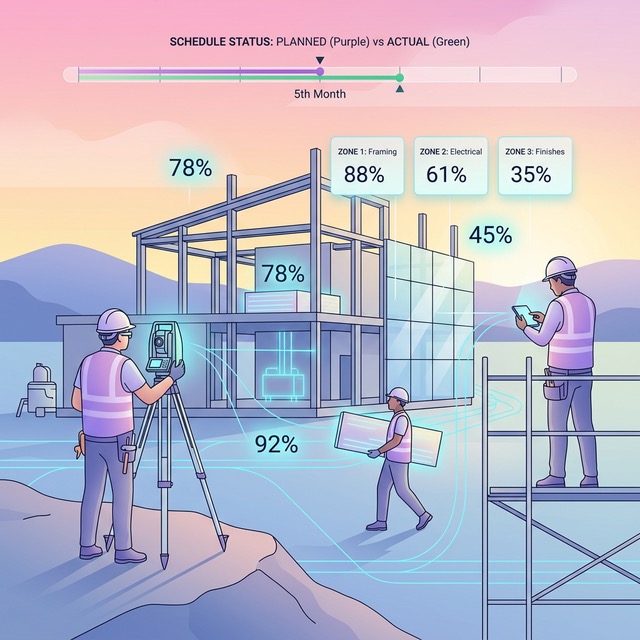 Real-Time Progress Visibility Without Workflow Disruption
From Reactive Reporting to Proactive Management
The shift from manual progress tracking to AI-powered monitoring isn't just about speed — it's about changing how project teams operate.
With traditional reporting, managers are always looking backward: what happened last week? With AI agents, they're looking forward: what's at risk this week?
This is the difference between:
- Reactive: "We discovered the delay in last Friday's report."
- Proactive: "AI flagged the schedule deviation on Tuesday. We adjusted crew allocation on Wednesday."
For construction firms competing on delivery performance, this shift is a genuine competitive advantage. Projects finish faster, clients are better informed, and disputes are reduced because progress data is transparent and timestamped from the moment work happens.
Getting Started
If your team is spending hours compiling progress reports, or if clients are asking for updates you can't deliver in real time, AI agents can solve this immediately — without new apps, hardware, or training.
Talk to us about deploying AI-powered progress tracking on your project, or see how construction teams are already using this approach in our case studies.
Part of our series on AI agents in construction. See also: What Is Agentic AI in Construction? and Construction Safety with AI.